
Commuter Bike vs Scooter: Which Fits Your Ride?
A published payload of 440 lbs and a pedals rule decide more daily trips than any motor watt figure does. Read four spec sheets against your own route before you spend.
Four published rows decide a commuting question: legal class, total payload, folded footprint and rider position. The Eunorau FLASH LITE ST 1.0 lists 440 lbs of payload and working pedals; the three scooters list 265 lbs to 330 lbs and no pedals.
01Commuter bike vs scooter: what actually separates them?
Four published rows settle it for a daily route: legal class, total payload, folded footprint and rider position.
Output gets the attention and says less than the other factors. Bikes and scooters share the same streets, yet the three Volt Trek scooters publish dual 1200 W, 1500 W and 3000 W drives, while the Eunorau FLASH LITE ST 1.0 publishes a 20 MPH pedal-assist figure. Neither number says what fits under a desk or what carries a grocery run.
A commuter bike carries pedals and an assist, like a traditional bicycle: the rider pedals, the drive adds power. An electric scooter carries a deck and no pedals: the motor does the work. Payload, storage, terrain, the choice of riding position and the legal benefits of pedals follow from that difference.
| Attribute | Commuter e-bike (FLASH LITE ST 1.0) | Electric scooters (D4+ MAX, LS7+, N6) |
|---|---|---|
| Power source | Pedal assist, you add leg power | Dual drives, 1200 W to 3000 W each |
| Published payload | 440 lbs total | 265 lbs / 330 lbs / 330 lbs |
| Tires | CST 20″ x 4.0″ | D4+ MAX 10-inch all-terrain · LS7+ 11-inch · N6 10-inch wide |
| Battery | See source note 4 | D4+ MAX 52 V 23.4 Ah · LS7+ 72 V 35 Ah · N6 72 V 30 Ah |
02How much can you carry on each one?
Payload splits the formats without argument: 440 lbs total on the FLASH LITE ST 1.0, 265 lbs on the D4+ MAX, and 330 lbs each on the LS7+ and N6. The scooters can offer more drive output; the bike can offer the higher ceiling.
Total payload covers you plus everything added, so it is the first row to check before a grocery run. The 20-inch folder weighs 82 lbs, folds to a small footprint and fits riders from 4’8″ to 6’4″. The scooters set their packs lower on a deck, are easily stowed between trips and run from 52 V 23.4 Ah to 72 V 35 Ah.
Anyone hauling tools, groceries and a laptop on one trip meets the 265 lb ceiling of the D4+ MAX first. Someone who rides five days a week and commutes through traffic meets it with less gear than expected.
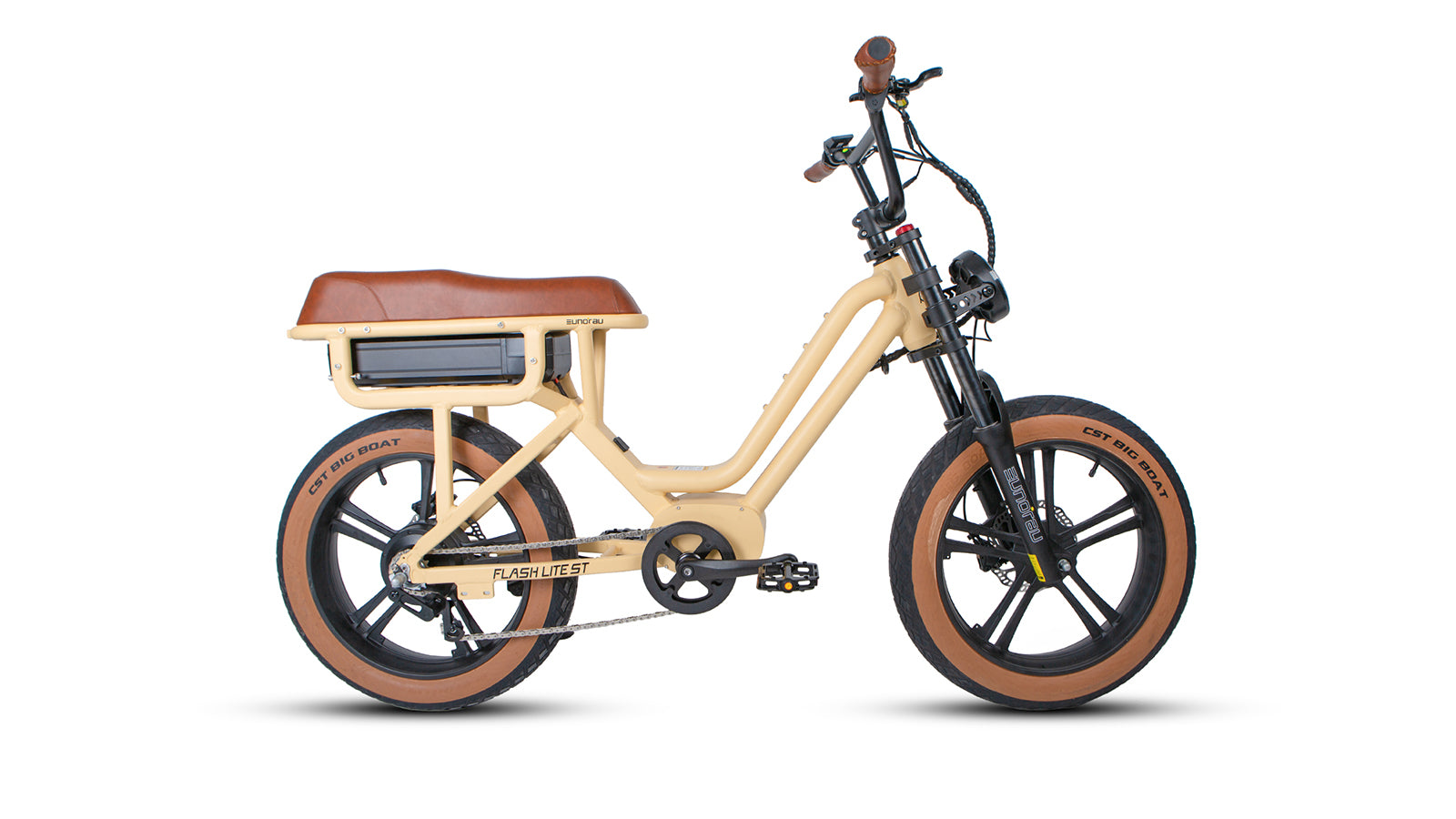
- Pedal assist, Class 2 default
- 440 lbs payload, 82 lbs frame
- CST 20″ x 4.0″, hydraulic discs
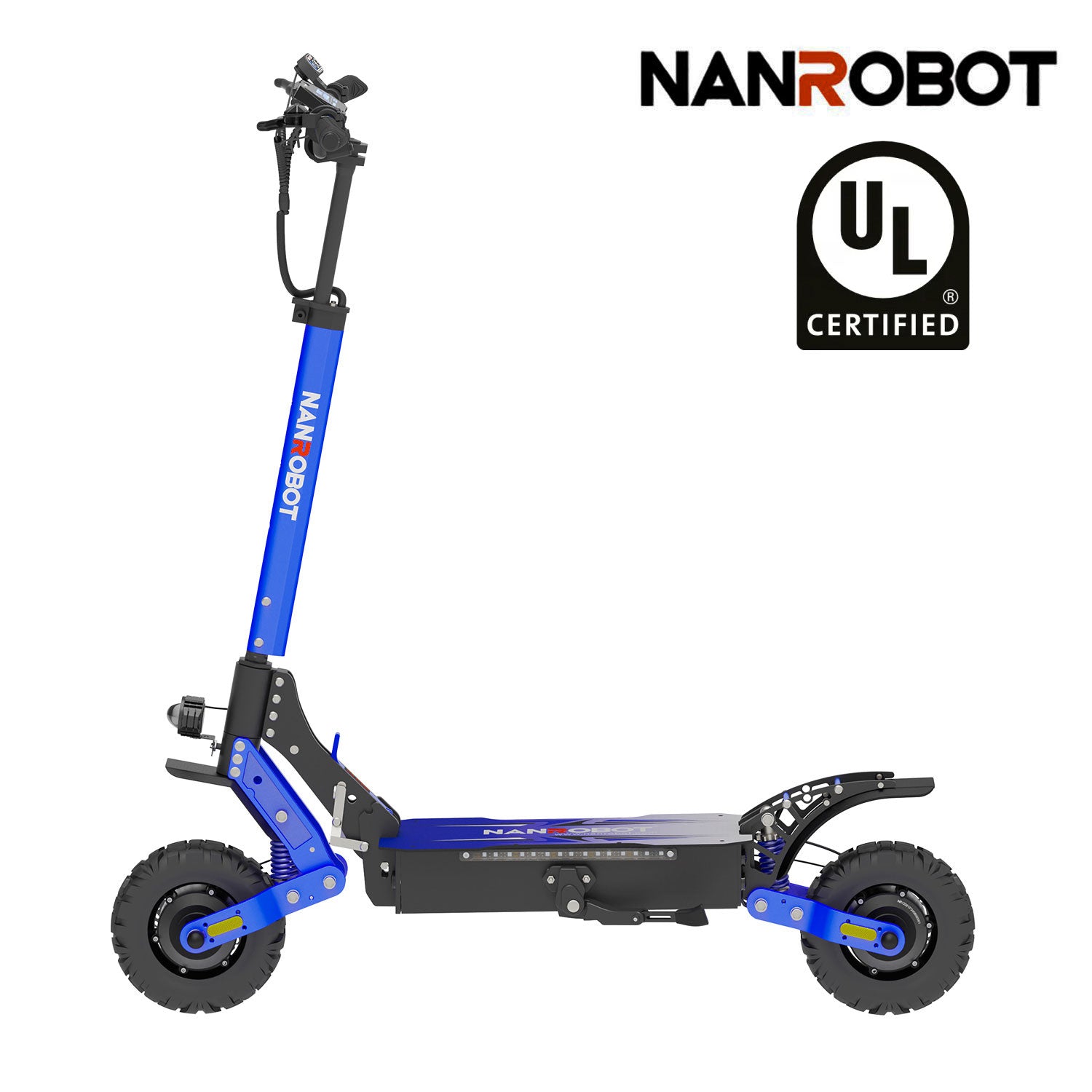
- Two 1200 W drives, 2400 W peak
- 52 V 23.4 Ah, 265 lbs load
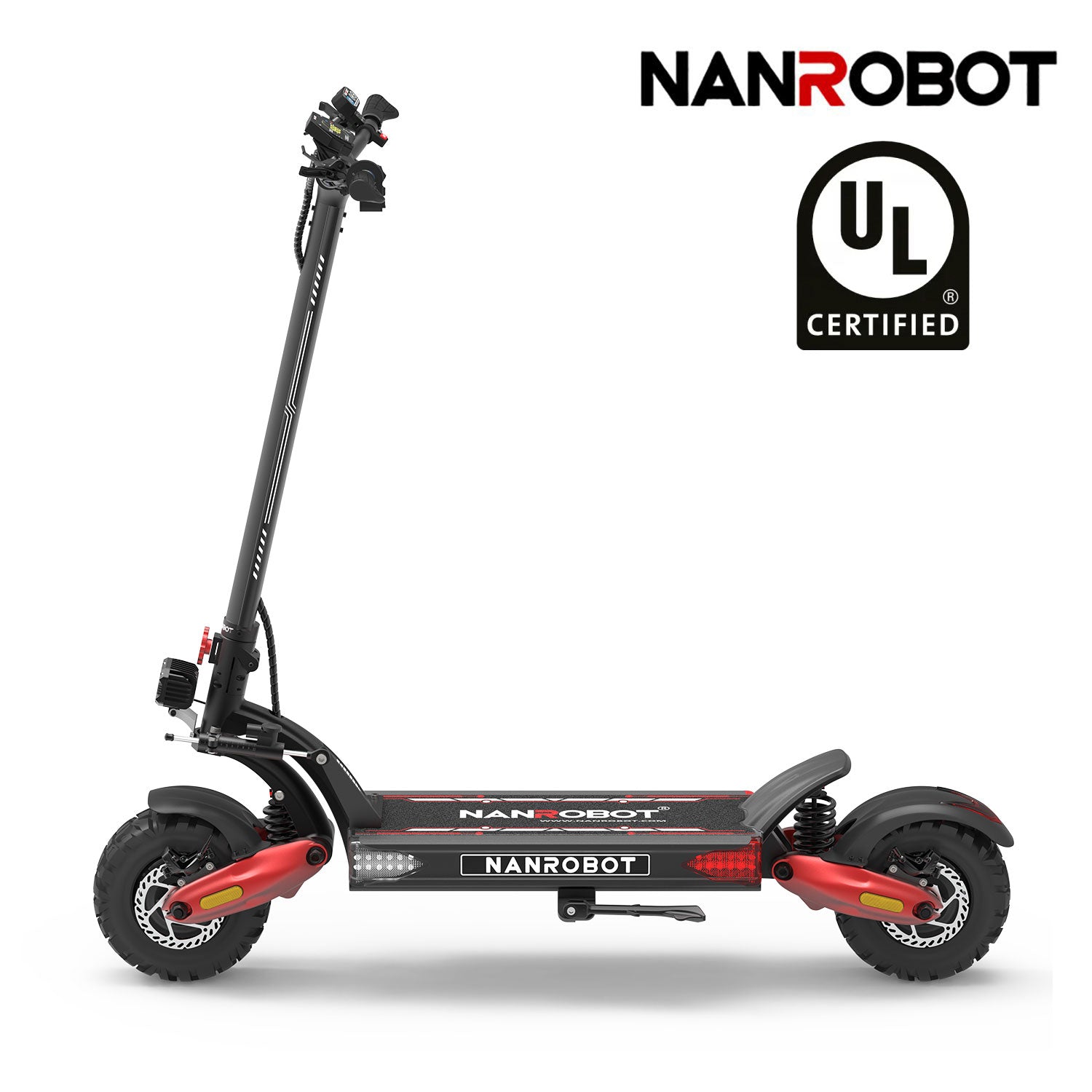
- Two 3000 W drives, 6000 W peak
- 72 V 35 Ah, 330 lbs load
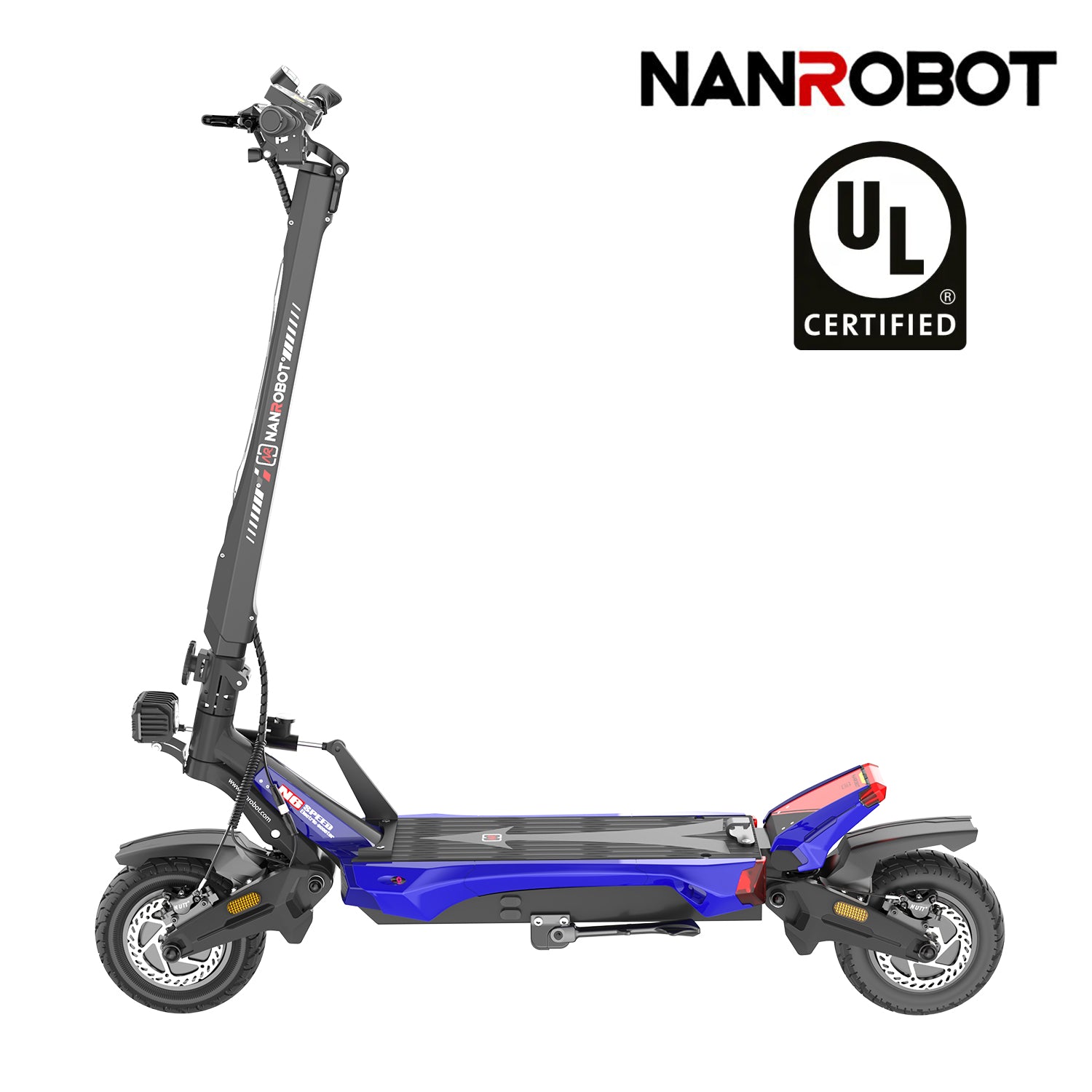
- Two 1500 W drives, 3000 W peak
- 72 V 30 Ah, 330 lbs load
03What changes in a city commute?
Three things change every day for commuters in city traffic: the eye line over the bars, the way the machine takes broken pavement, and where it lives between trips.
Position comes first: commuting puts it to work twice a day. The bike is ridden seated, with both hands on a hydraulic disc lever and a higher eye line; the scooter is ridden standing on a deck instead. The split shows at every stoplight and on the hills, where pedal assist lets the person on the machine add leg power.
Tires and terrain come next. The CST 20-inch by 4.0-inch tire on the folder puts volume between frame and road; the scooters run 10-inch tires, with a larger 11-inch option on the LS7+, under a lower deck. Both stop with hydraulic discs, so wheel size and stability separate them more than braking does, and stability is where safety shows up first, and they are often what decides comfort on broken pavement.
Cost and running costs are not the same number: the upfront cost of the machine, the cost of a replacement pack and the running costs of charging move separately. Compare those costs before you decide which format the commute needs, because a longer or faster daily ride puts more on pack size than on any range claim. Storage closes the trip: a scooter folds flatter and stands on its deck, while the 82 lb folder asks for a plan. On short urban hills, portability and safety matter more than the highest drive figure on the list.
04Which one is legal where you ride?
16 CFR Part 1512 defines the federal low-speed electric bicycle as two or three wheels with fully functional pedals, a motor below 750 W and a 20 mph motor-speed cap — a test the three scooters do not meet.
Classes 1, 2 and 3 build on that definition. The FLASH LITE ST 1.0 ships in a default Class 2 setting, with Class 1, 2, 3, 3C and 4 modes on the display. Land managers usually decide where each class may be ridden, so check the rules for your commuting routes before you commit.
On federal land the split is sharper. The Bureau of Land Management limits e-bikes on BLM lands to classes 1, 2 and 3, and local managers decide which trails can admit them. A scooter with no pedals sits outside that class system, so a trail that admits e-bikes is not automatically open to a scooter. Both texts are public: 16 CFR Part 1512 on eCFR and the BLM E-Bikes page, each consulted September 15, 2026.
05How do the real spec sheets compare?
Put the four published sheets side by side and the split lands on payload, tires and battery — not on motor watts.
Every figure below comes from the product pages linked here, checked on September 15, 2026. Only you know how many miles your route runs and how much range a longer day asks for.
| Model | Motor | Battery | Payload | Tires | Brakes |
|---|---|---|---|---|---|
| Eunorau FLASH LITE ST 1.0 | Pedal assist, Class 2 default | See source note 4 | 440 lbs | CST 20″ x 4.0″ | Hydraulic disc |
| NANROBOT D4+ MAX | 2 x 1200 W, 2400 W peak | 52 V 23.4 Ah | 265 lbs | 10-inch all-terrain | Hydraulic disc |
| NANROBOT LS7+ | 2 x 3000 W, 6000 W peak | 72 V 35 Ah | 330 lbs | 11-inch | Hydraulic disc |
| NANROBOT N6 | 2 x 1500 W, 3000 W peak | 72 V 30 Ah | 330 lbs | 10-inch wide | Hydraulic disc |
- Total published payload: 440 lbs on the FLASH LITE ST 1.0, 265 lbs on the D4+ MAX, 330 lbs on the LS7+ and N6.
- Drive output does not predict payload or cost: the scooters publish 1200 W to 3000 W each.
- Pedals decide the legal frame: 16 CFR 1512 asks for pedals and a drive under 750 W; e-bikes on BLM land follow classes 1, 2 and 3 only.
- Tires split 20-inch by 4.0-inch against 10-inch and 11-inch, and the miles between home and work decide which bike or scooter fits.
06Frequently asked questions
What separates a commuter e-bike from an electric scooter on a daily route?
Four published attributes: legal class, payload, folded footprint and rider position. The FLASH LITE ST 1.0 lists 440 lbs of payload, a 20 MPH pedal-assist figure and functional pedals, which keeps it inside the federal low-speed electric bicycle definition. The scooters list 265 lbs to 330 lbs and no pedals.
Is an electric scooter an e-bike under federal rules?
No. 16 CFR Part 1512 defines a low-speed electric bicycle as two or three wheels with fully functional pedals, a motor below 750 W and a 20 mph motor-speed cap. The three scooters here run dual drives and carry no pedals, so they sit outside that definition.
Which machine carries more on a commute?
The commuter e-bike, on published figures. The FLASH LITE ST 1.0 lists 440 lbs of total payload. The NANROBOT D4+ MAX lists 265 lbs, and the LS7+ and N6 each list 330 lbs. Total payload counts the rider plus anything added, so it is the first row to compare.
Do wheel and tire sizes matter on city streets?
They change how a machine crosses rough pavement. The FLASH LITE ST 1.0 runs CST 20-inch by 4.0-inch tires and hydraulic disc brakes. The scooters run 10-inch and 11-inch tires with hydraulic brakes as well. Diameter and volume are the visible split between the two formats.
What should I check first on a commuter spec sheet?
Payload, then legal class, then wheel size. Payload tells you what the frame is built to carry with the rider included. Legal class tells you where the machine can go, including which trails admit it. Wheel size and folded footprint decide whether it lives under a desk or in a closet.
- 16 CFR Part 1512, Electronic Code of Federal Regulations — the federal definition of a “low-speed electric bicycle”. ecfr.gov — 16 CFR Part 1512 — consulted September 15, 2026.
- Bureau of Land Management, E-Bikes — e-bike use on BLM lands limited to classes 1, 2 and 3. blm.gov/programs/recreation/e-bikes — consulted September 15, 2026.
- Published product pages checked September 15, 2026: FLASH LITE ST 1.0, NANROBOT D4+ MAX, NANROBOT LS7+, NANROBOT N6.
- Battery energy in watt-hours: [A VERIFIER] — the product pages checked publish volts and amp-hours separately; a consolidated watt-hour rating should be confirmed with the supplier before any comparison depends on it.


