
Long-Range Electric Scooters for Adults: Real Wh & Charge Time
“Long range” on a spec sheet is not the same as range on the road: the number that tells you how far an electric scooter can go is the watt-hour rating, and most product pages hide it behind advertised miles.
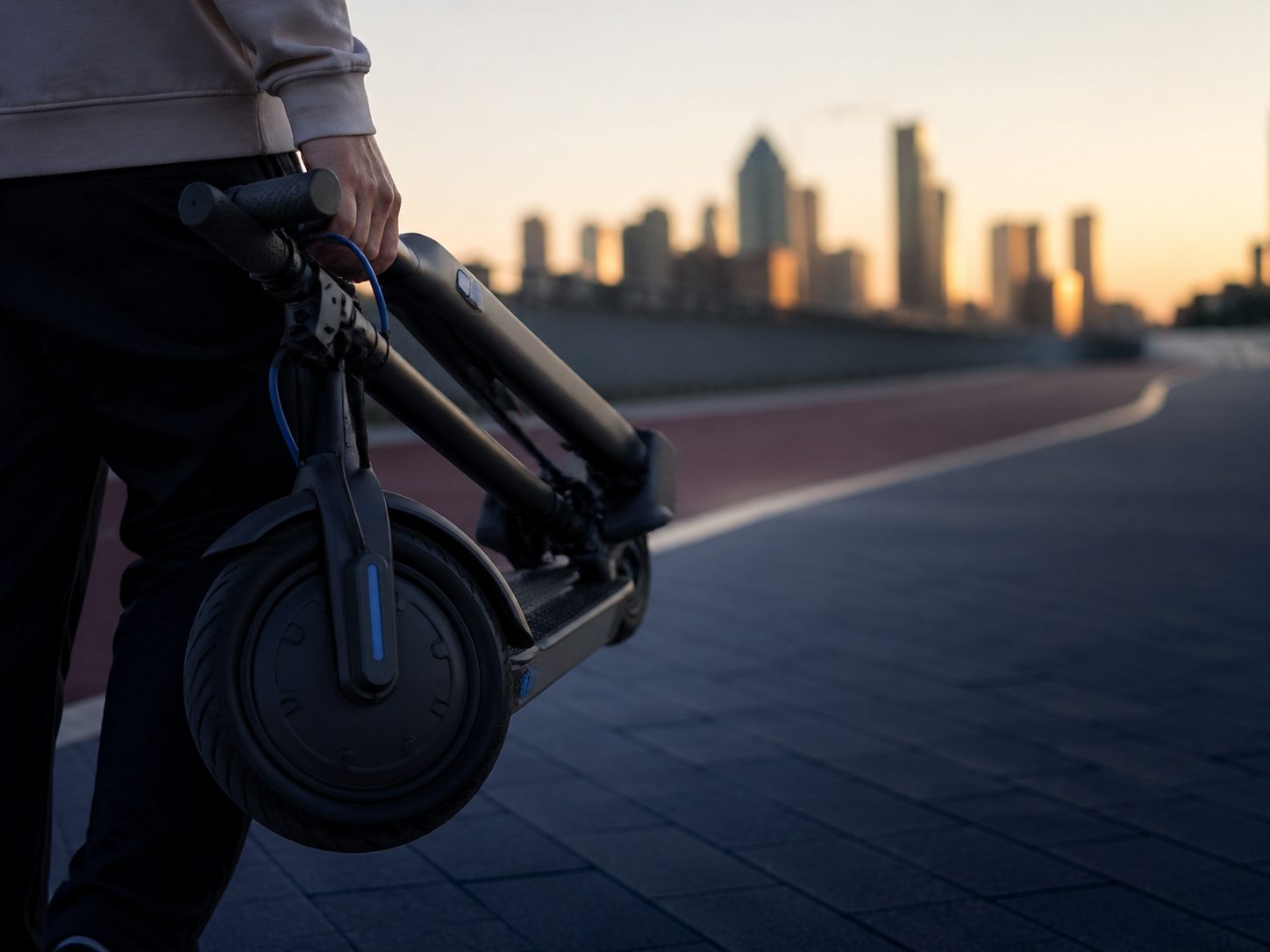
A long range electric scooter for adults is one whose pack rating in watt-hours — voltage × amp-hours (V × Ah) — is high enough to cover your real route with reserve to spare. Advertised miles come from different test conditions; watt-hours are the comparable figure. On the Volt Trek catalog, the long-range scooters span 1,217 Wh (NANROBOT D4+ MAX) to 2,520 Wh (NANROBOT LS7+).
01What “long range” actually means on an electric scooter
“Long range” is a pack size, not a distance. Electric scooter packs are rated in watt-hours (Wh), which is simply nominal voltage multiplied by amp-hours: 52 V × 23.4 Ah = 1,217 Wh. That single figure tells you how much energy the pack stores and lets you compare two scooters directly — advertised miles only work within one brand’s test.
Before you ride, the most useful number on the spec sheet is the Wh figure: adult scooters use lithium-ion packs, and it’s the pack capacity that decides how far you go. A bigger pack stores more energy, but it also weighs more and costs more. The pro of a bigger pack is reserve; the con is weight, price and refill time. Overall, the trade-off — range versus weight versus price, and what fits your budget — is the real decision behind every big-pack scooter.
The strip above lists the attributes that define a long range adult scooter in the Volt Trek catalog; pack size comes first because it is the one spec you can compare across brands without decoding marketing language.
- Range starts with pack size in watt-hours; Wh is a great way to compare scooters directly.
- Wh = nominal voltage × amp-hours, printed on most product pages.
- More Wh means more stored energy — and more weight and price.
02Why watt-hours matter more than advertised miles
Advertised mile ranges come from different test conditions, so they are hard to compare. One brand can quote a flat-ground figure; another quotes a mixed-route figure. Two scooters with the same pack size can therefore show very different “range” numbers.
Watt-hours are the opposite: it’s a hard number you can verify from the pack rating. Since range depends on real conditions, pack size matters more than the sticker. How far you get depends on how the scooter rides and who rides it, depending on rider weight, speed, tire type, ground, wind and temperature. Advertised miles are estimates, not tested numbers.
Relative impact, illustrative — no measured mile figures are published for these models; the bars rank the factors, they do not claim percentages.
However, the pack is only half the story: at sustained 20+ mph it drains faster than at a relaxed pace, and the effect is largest on hills. Each brand runs its own range test, so mile figures should be read as estimates that vary by brand — the Wh figure stays comparable whether you look at Segway, NANROBOT or anyone else.
The takeaway: when you read a range claim, ask what pack it comes from. A scooter with a 1,800 Wh pack stores more energy than one with 1,217 Wh, and that difference shows up on the road before any marketing claim does.
03Real battery size: the Wh math on the scooters we sell
The Volt Trek scooter collection includes four NANROBOT dual-motor scooters with packs from 1,217 Wh to 2,520 Wh. The table lists what the product pages state — voltage, amp-hours, tires, motors and load rating — plus the watt-hour figure calculated from them.
| Model | Battery | Wh | Tires | Motors | Max load | Price |
|---|---|---|---|---|---|---|
| NANROBOT D4+ MAX | 52 V 23.4 Ah | 1,217 Wh | 10″ off-road | 1200 W × 2 (2400 W peak) | 265 lb | $999 |
| NANROBOT D6+ MAX | 60 V 30 Ah | 1,800 Wh | 10″ wide | 1500 W × 2 (3000 W peak) | 330 lb | $1,399 |
| NANROBOT N6 | 72 V 30 Ah | 2,160 Wh | 10″ wide | 1500 W × 2 (3000 W peak) | 330 lb | $1,649 |
| NANROBOT LS7+ Largest-pack pick | 72 V 35 Ah | 2,520 Wh | 11″ | 3000 W × 2 (6000 W peak) | 330 lb | $2,299 |
Two things stand out. The pro of the higher-voltage packs is clear: the jump from 52 V to 72 V nearly doubles the stored energy between the D4+ MAX and the N6 — the average of the four packs is 1,924 Wh. Second, the LS7+ pairs the largest pack with the most powerful motors, 6,000 W peak, so the extra watt-hours are there for a rider who will actually use the power rather than just carry it. However, that power and reserve come with added weight and price.
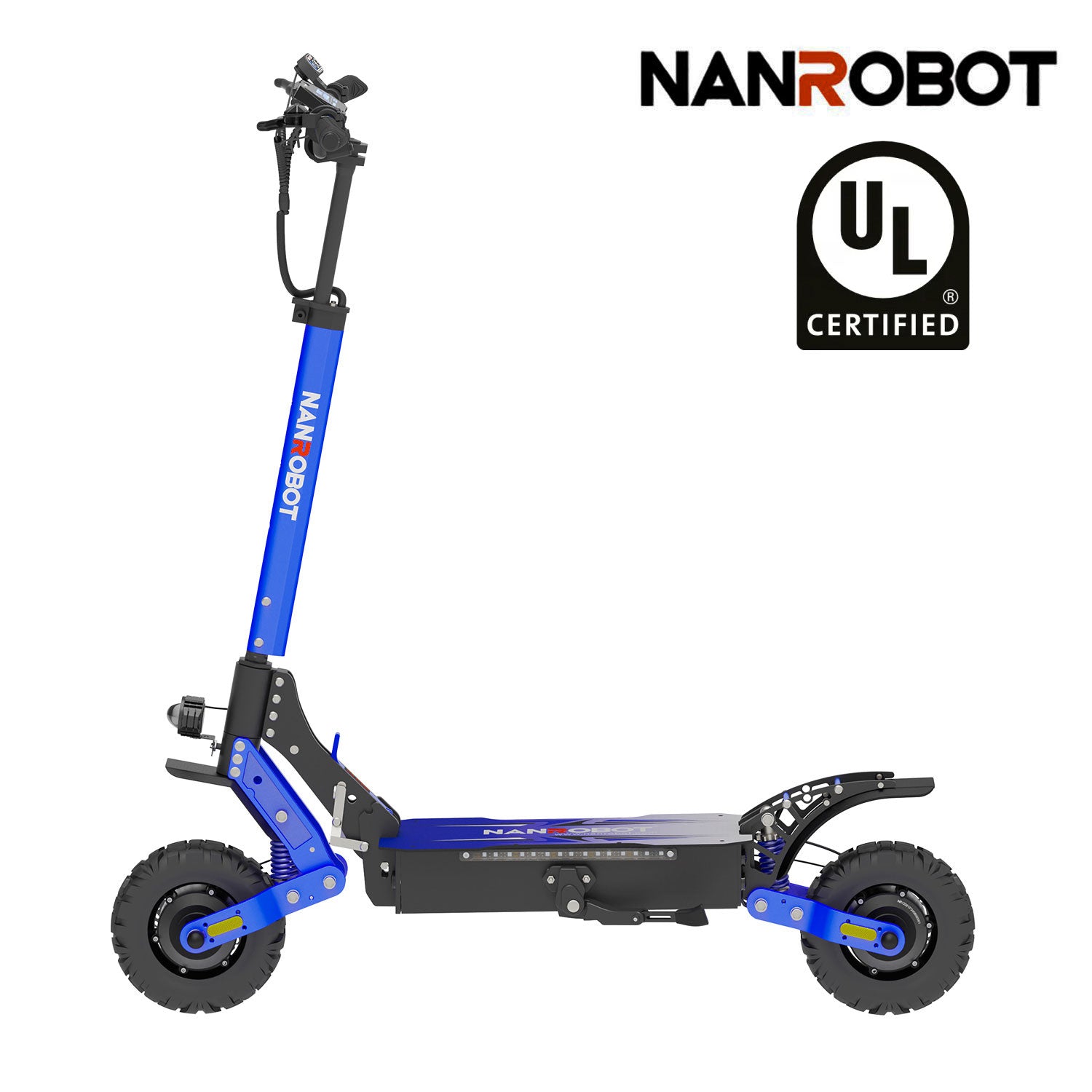
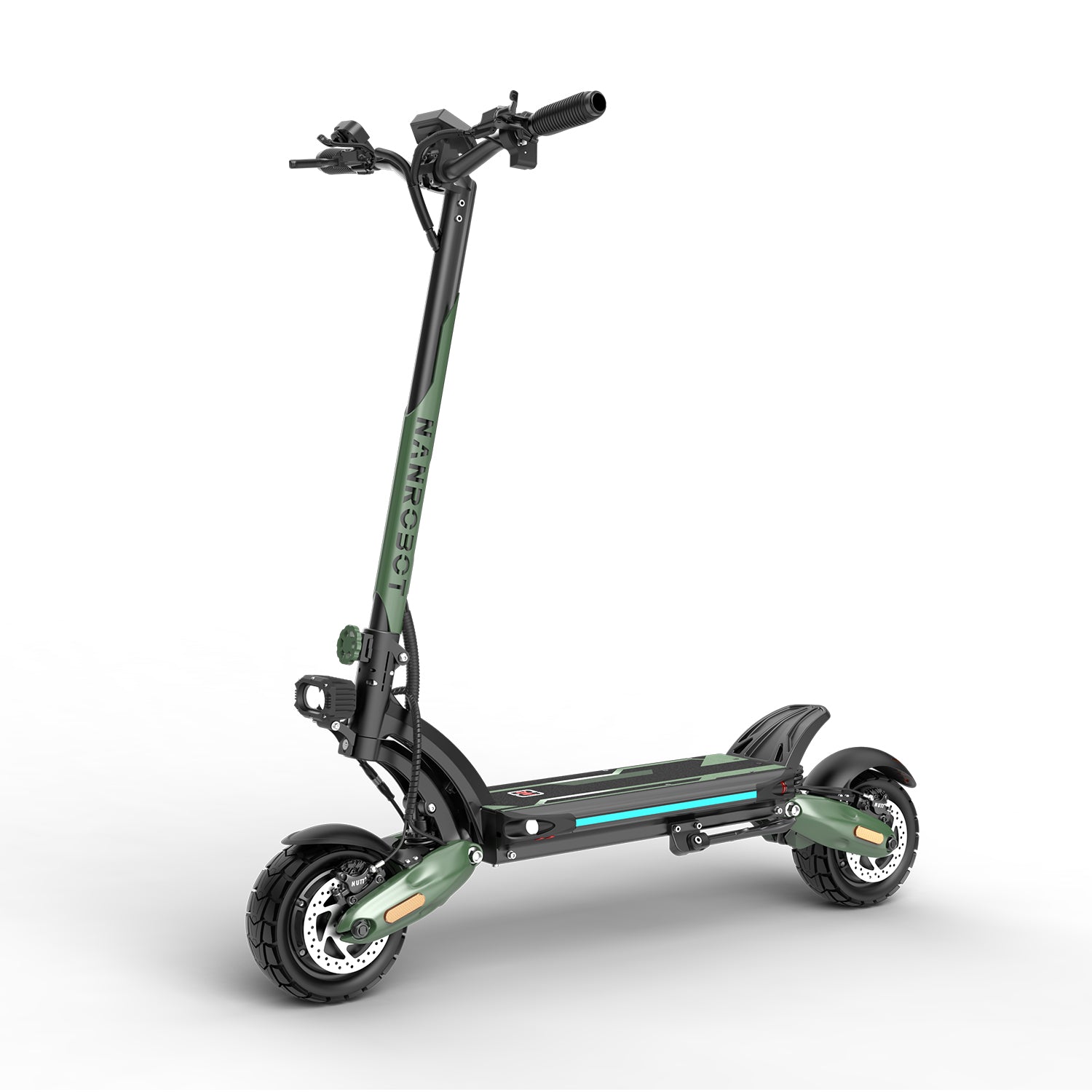
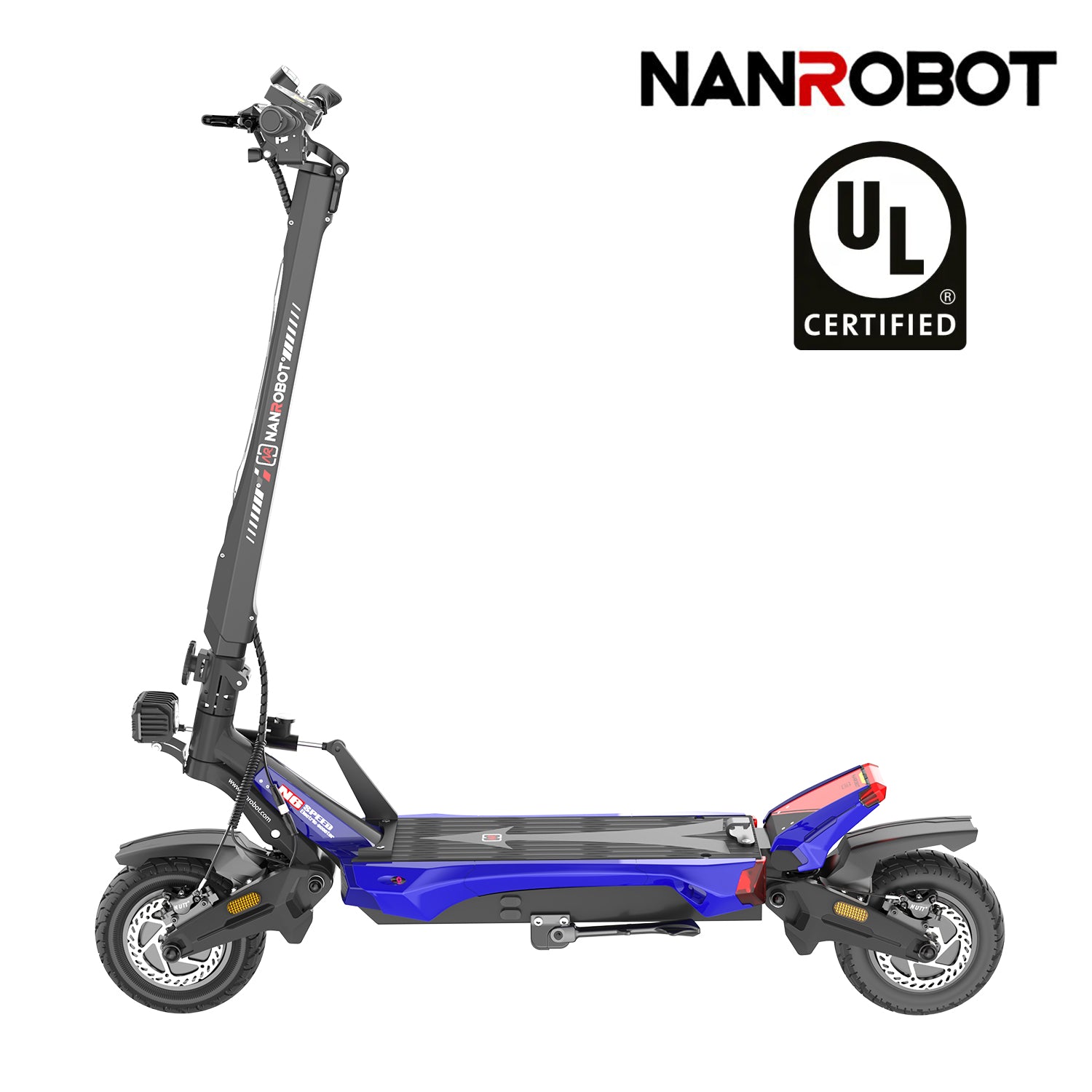
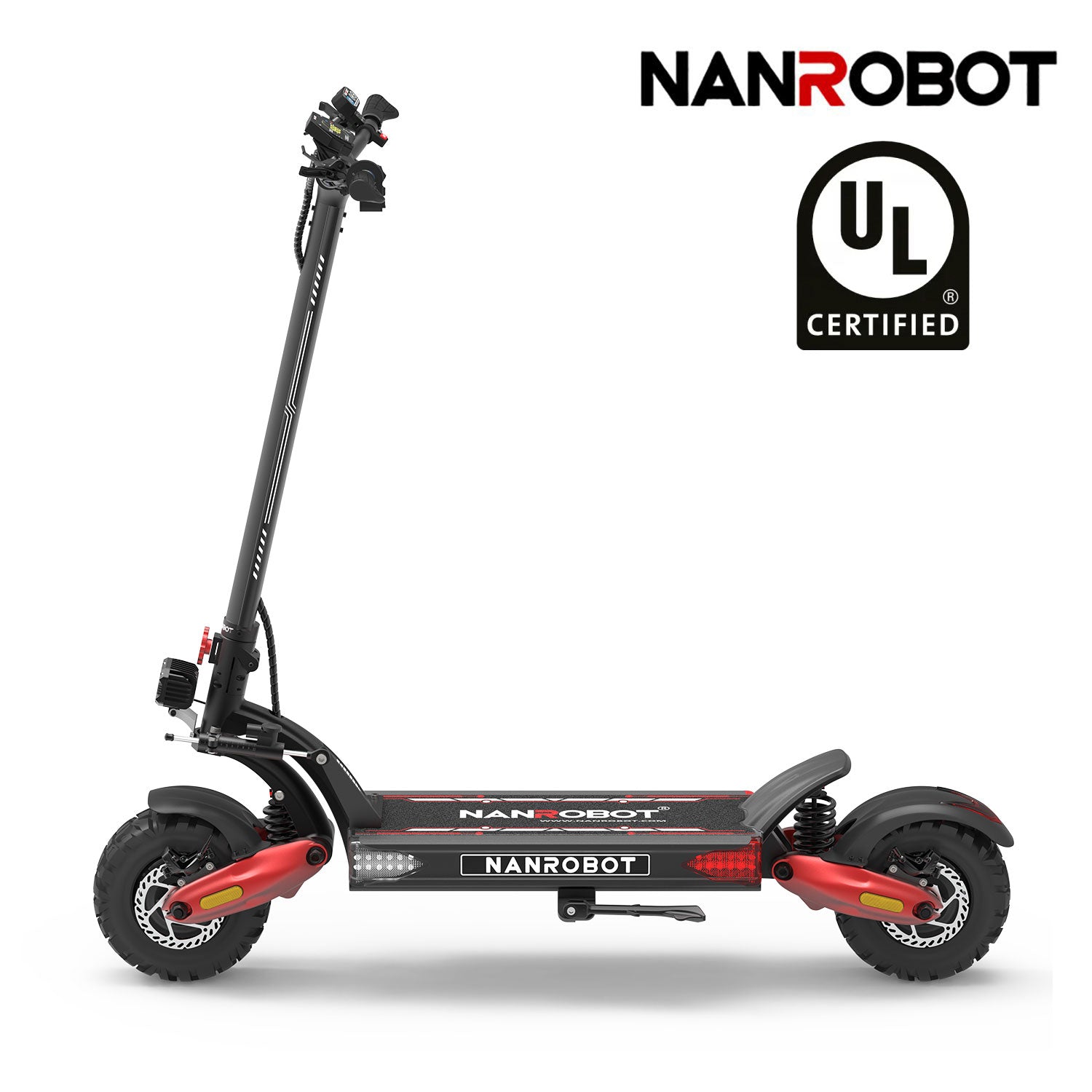
The four scooters cover the practical spread: the D4+ MAX for lighter riders on city routes, the D6+ MAX and N6 for heavier loads and longer commutes, the LS7+ when range and power are both non-negotiable. All four use hydraulic disc brakes and dual motors, which matters for real-world performance.
04Charge time: what to expect and how to estimate it
Charge time follows the same math as range: time in hours = pack size in watt-hours ÷ wall unit output in watts. A 1,800 Wh pack on a 300 W unit takes 6 hours; on a 600 W unit, 3 hours. The wall unit is the variable, not the pack.
That is why the included wall unit deserves as much attention as the scooter. Volt Trek sells the NANROBOT fast charger separately at $140, and the product pages do not state the wattage of the included unit — before you plan your commute, confirm the output for your exact scooter [À VÉRIFIER].
The practical pattern: a larger pack takes longer to fill with the same wall unit — a 2,520 Wh pack takes more than twice as long as a 1,217 Wh pack on identical wall unit output. If your route demands a full refill daily, factor that overnight window into the decision.
05What to check before you buy a long range electric scooter
Before spending $999 to $2,299, run the checklist below; every item is checkable on the product page. No single scooter is perfect for every route; match the pack to your ride.
- Pack size (Wh): if your route is long or hilly, target 1,800 Wh and above; under 1,500 Wh suits shorter city loops.
- Voltage (V): 52 V packs are lighter and cheaper; 60 V and 72 V packs carry more energy and feed more powerful motors.
- Dual motors: two wheel motors help on hills and with heavy loads; single motors struggle under the same conditions.
- Brakes: hydraulic disc brakes are the standard on these scooters for a reason — big packs add speed and weight to stop.
- Max load: check the rating against your body weight plus gear. The catalog spans 265 lb to 330 lb across these scooters.
- Suspension: if your route is rough, confirm whether the scooter has suspension — not every listing states it [À VÉRIFIER].
- Charger: confirm what is included and its output; a fast charger is a separate purchase on NANROBOT scooters.
- Warranty and support: buy from a dealer who answers pre-purchase questions and backs the warranty — Volt Trek vets every scooter it lists for build quality, real-world range and warranty support.
This is not a scooter for everyone. If you ride under 5 miles on flat pavement, a big-pack dual-motor scooter is more machine than you need. For the daily commuter who rides hills or carries cargo, these scooters earn their cost when range is part of the equation, especially in cold weather or headwinds.
06Frequently asked questions
How far can a long range electric scooter go?
Range depends on pack size in watt-hours, rider weight, speed, tire type and terrain. The Volt Trek pages list voltage and amp-hours for each scooter — the NANROBOT LS7+, for example, carries a 72 V 35 Ah pack (2,520 Wh) — but no mile figure. A larger pack gives more reserve; exact miles must be confirmed in real riding conditions.
How long does it take to charge an electric scooter?
Divide pack size in watt-hours by the charger output in watts. A 2,160 Wh pack on a 300 W charger takes 7.2 hours as an illustrative calculation. The actual time depends on the unit included with your scooter, and Volt Trek sells NANROBOT fast chargers separately. Confirm the output before relying on any time figure.
What is a good battery capacity (Wh) for an electric scooter?
The right pack size depends on your weight, speed and route, so a single number would be misleading. In the Volt Trek catalog, the long range scooters span 1,217 Wh (D4+ MAX) to 2,520 Wh (LS7+); for extended adult commuting, packs above 2,000 Wh offer the most reserve. Compare the V × Ah figure on the product page rather than advertised miles.
- Volt Trek — NANROBOT D4+ MAX product page (specifications, dealer-supplied), consulted August 3, 2026.
- Volt Trek — NANROBOT D6+ MAX product page (specifications), consulted August 3, 2026.
- Volt Trek — NANROBOT N6 product page (specifications), consulted August 3, 2026.
- Volt Trek — NANROBOT LS7+ product page (specifications), consulted August 3, 2026.
- Volt Trek — Electric scooters collection, consulted August 3, 2026.
- Wikipedia — Electric scooter, consulted August 3, 2026.
- Wikipedia — Lithium-ion battery, consulted August 3, 2026.


