
City Bike Buying Guide: What Actually Matters
Short answer: A good city bike comes down to three decisions, in this order — gearing designed for your terrain (single-speed, 3-speed internal hub, or a step-thru frame), a build that fits your ride to work or around town, and components (brakes, tires, rack mounts) built for daily use rather than weekend rides. Get gearing right first; fit and components follow from there.
What Is a City Bike, Exactly?
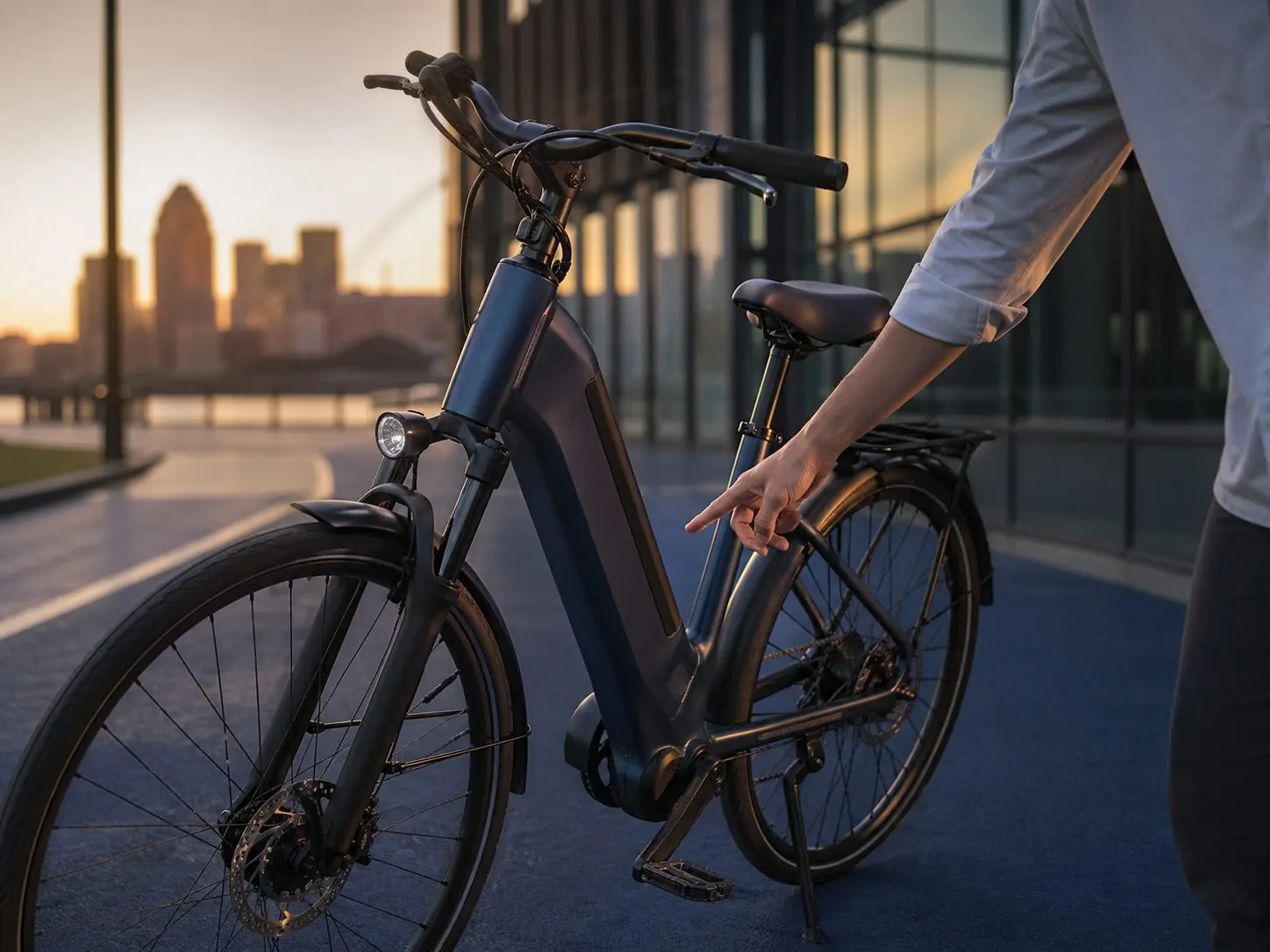
A city bike is a bicycle built for short, frequent rides to work, the store, or across town — not for racing on the road or hitting mountain trails. The tell is the riding position: your hands sit close to hip height instead of reaching down to drop bars, which keeps your head up in traffic and takes pressure off your wrists on a 20-minute ride.
City bike, defined by attribute
- Build: comfortable, upright geometry with a shorter reach than a road bike
- Gearing: single-speed, fixed-gear, or a 3-speed internal hub — rarely a wide-range derailleur
- Tires: 28–38mm, puncture-resistant casing built for pavement and potholes, not knobby off-road tread
- Riding position: relaxed, hands at or above hip level
Everything else — color, frame material, brand — is preference. The features that actually determine whether a bike works for your commute are gearing, fit, and the components it ships with.
Single-Speed, 3-Speed, or Step-Thru: Which Gearing Fits Your Commute?
The gearing decision comes down to your terrain and how much maintenance you want to do. A single-speed or fixed-gear bike has the fewest moving parts to fail; a 3-speed internal hub adds range for hills without the exposed derailleur of a road bike; a step-thru frame trades a top tube for easier mounting, usually paired with either gearing option.
| Type | Suited to | Maintenance | Live example |
|---|---|---|---|
| Single-speed / fixed-gear | Flat routes, short commutes, riders who want fewer parts to service | Lowest — no derailleur, no shifter cables | 4130 – Matte Olive (Fixed Gear / Single-Speed) |
| 3-speed internal hub | Rolling terrain, mixed commutes with a hill or two | Low — hub gears are sealed, shift at a stop | City Bike – The Black & Tan (3 Speed) |
| Step-thru frame | Riders who dismount often, wear work or casual clothing, want easier mounting | Depends on gearing paired with the frame | BATCH BICYCLES – The Step-Thru Comfort Bike |
Frame Geometry and Fit: What to Check Before You Buy
A bike that fits sits you upright with a slight bend at the elbow and lets both feet touch the ground at a stop without leaving the saddle. Standover height — the clearance between your inseam and the top tube when you straddle it — matters more here than reach, because you’ll be stopping and starting in traffic constantly.
Fit checklist
- Standover clearance: 1–2 inches over the top tube when flat-footed (more on a step-thru, by design, for ease of mounting)
- Saddle height: slight knee bend at the bottom of the pedal stroke
- Reach: relaxed elbow bend on the grips, not a stretch
- Frame size: check the specific size chart on each product page — sizing varies by model, not just brand
Sizing charts differ between the fixed-gear frames like the 4130 line and step-thru models like the BATCH BICYCLES comfort bike, so check the size chart on the specific product page rather than assuming your size carries over between models.
City Bike vs. Road, Mountain, Hybrid, Gravel, and Electric Commuter Bikes
People searching for a city bike are often really asking how it’s different from the other types on the shop floor. The short version: city bikes trade speed and off-road capability for an upright, comfortable riding position and low maintenance on pavement. Here’s how the main options actually differ once you look past the marketing names.
| Bike type | Handlebars & position | Tires & wheels | Suspension | Primary use |
|---|---|---|---|---|
| City bike | Flat or swept-back bars, upright position | 28–38mm, wide enough for comfort on urban paths | None, usually | Short, frequent commuting and errands |
| Road bike | Drop bars, lower and stretched-out position | Narrow, lightweight wheels built for speed | None | Longer, faster rides on smooth pavement |
| Mountain bike | Flat bars, wide grip for control | Wide, knobby tires; often carbon or aluminum wheels | Front or full suspension for rough terrain | Off-road trails, not daily street commuting |
| Hybrid bike | Flat bars, upright-to-moderate position | Medium-width tires, a middle ground on comfort and speed | Sometimes a front fork with light suspension | Mixed-use riders who want one bike for commuting and occasional trails |
| Gravel bike | Drop bars, slightly more upright than a road bike | Wide tires for mixed pavement and unpaved paths | None, sometimes a suspension seatpost | Riders who mix pavement commuting with unpaved routes |
| Electric commuter | Varies by model, usually upright like a city bike | Wider tires to handle the added weight of the motor and battery | Varies by model | Longer or hillier commutes where pedal-assist reduces effort |
If your commute is flat and short, a city bike is usually the simplest, lightest option with the fewest extra components to maintain. If it regularly climbs or runs past four or five miles, it’s worth comparing against a dedicated electric option before buying — see our all-road electric bike buying guide for how motor and battery specs translate to real-world range, and browse the electric commuter lineup directly.
Components That Matter for Daily Riding
Brakes, tires, and rack compatibility affect daily comfort far more than frame material does. These are the parts that see the most wear from stop-and-go traffic and weather, and they’re what separates bikes that hold up from ones that need constant fixes.
Component attributes to check on the spec sheet
- Brakes: rim brakes are lighter and simpler to service; disc brakes hold up better in wet conditions and need less hand force
- Tires: width (28–38mm typical) and puncture protection matter more than tread pattern on pavement
- Rack and fender mounts: confirm eyelets are on the frame before buying if you plan to carry cargo or ride in rain — a rear rack is a common add-on for grocery runs
- Drivetrain exposure: a fully enclosed chainguard reduces pant-leg wear and chain maintenance on a daily commuter
- Lights: front and rear lights aren’t always included — check whether mounts are built in before adding them as an extra purchase
None of this requires an engineering background to check. A quick look at the spec sheet on the product page — brake type, tire width, rack mounts, included lights — tells you most of what you need to know, and it’s simple to compare two models side by side that way with a bit less guesswork.
What You’ll Actually Pay for a Quality City Bike
Pricing spreads across a few tiers depending on frame material, gearing, and finish — single-speed steel frames sit at the entry end, internal hub gearing and step-thru comfort frames move up from there. If you’re looking for a fast way to narrow it down, current pricing and availability for each model live on the product page rather than in this guide, since prices and stock change. Browse the lineup on our city bike collection page to compare models and see live pricing before you decide.
City Bike Buying Guide FAQ
What’s the difference between a city bike and a road bike?
A city bike keeps you upright with hands at hip height for visibility and comfort in traffic; a road bike puts you lower with drop bars for aerodynamics over longer, faster rides. City bikes also run wider, more puncture-resistant tires than road bikes.
Is a single-speed city bike hard to ride on hills?
On a flat commute, no — there’s nothing to shift, which is part of the appeal. On a route with sustained climbs, a single fixed gear ratio means every hill is harder than it would be with a 3-speed hub or an electric-assist option.
What size city bike do I need?
Sizing varies by model, not just by brand, so check the size chart on the specific product page. As a general check, you want 1–2 inches of standover clearance when flat-footed over the top tube (more on a step-thru frame by design).
Do city bikes come with fenders and racks?
It depends on the model. Confirm frame eyelets for racks and fenders on the specific product page before buying if you plan to carry cargo or commute in wet weather.
Should I buy a step-thru frame if I’m not sure I need one?
A step-thru frame makes mounting and dismounting easier, especially in work or casual clothing, and adds standover clearance without changing the gearing options available. It’s a frame-shape decision, not a gearing one, so it can be paired with either single-speed or 3-speed drivetrains depending on the model.
When does an electric commuter make more sense than a city bike?
Once your commute regularly includes hills or runs past four or five miles, pedal-assist reduces the physical toll enough that most riders find it worth the added weight and cost. For flat, short commutes, a traditional city bike stays lighter and simpler to maintain.
Rim brakes or disc brakes for a daily city commute?
Rim brakes are lighter and simpler to service; disc brakes perform more consistently in wet weather and require less hand force to stop. Riders in rainy climates or hillier commutes tend to prefer disc brakes for that reason.
Sources
- League of American Bicyclists — commuting and city riding resources
- PeopleForBikes — U.S. bicycling industry and ridership data


