
3 Wheel Electric Scooter Guide: Stability, Speed, Range
Three wheels add low-speed stability and change how a scooter corners. Here is how 3 wheel electric scooters compare on range, speed, comfort, and who they actually fit.
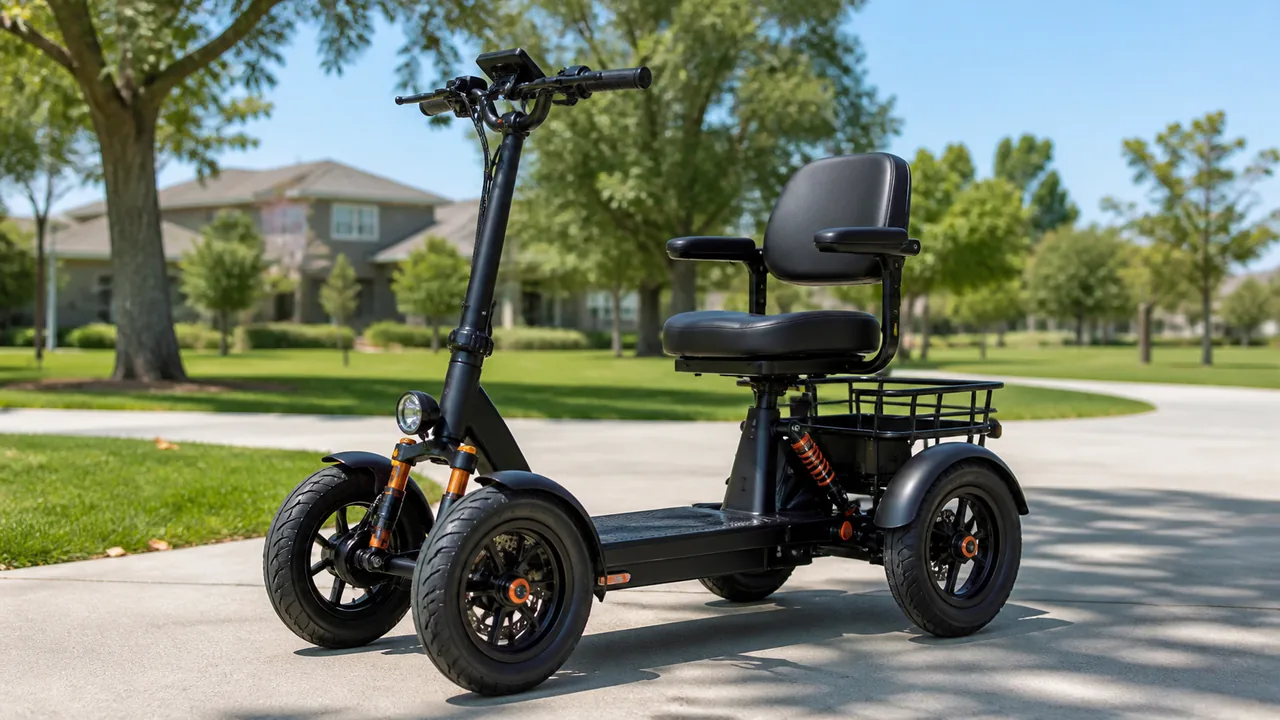
A 3 wheel electric scooter is an electric ride with two wheels at the front or rear and one at the opposite end, designed for more low-speed stability than a two-wheel scooter. Most models pair a battery and motor with a seat, and range from mobility scooters to recreational electric trikes. The right choice depends on your balance, terrain, and distance.
01What is a 3 wheel electric scooter?
A 3 wheel electric scooter is an electric vehicle with three wheels — usually two in front and one behind — that trades the lean-and-turn of a two-wheeler for a planted, stable ride. It is an umbrella term: it covers mobility scooters for limited mobility, and recreational electric trikes for riders who want a seated, stable electric ride for commuting, errands, or leisure.
The shared idea is simple. Two wheels demand balance from the rider. A third wheel removes that demand at low speed, which is exactly where most people feel unsure on a scooter. Models differ on battery capacity, motor power, seat design, and suspension — the specs that decide range, speed, and comfort. A comfortable seat is a standard feature on most models, and a clear view of the road comes with the upright riding position.
02Are three wheels more stable than two?
At low speed, yes: a 3 wheel electric scooter does not need the rider’s balance to stay upright, which is why they suit riders with limited balance or confidence. In corners, the trade-off is real — a two-wheel scooter leans into a turn, while a three-wheeler holds its line and asks the rider to steer more deliberately.
So “stable” depends on where you ride. Around a neighborhood at 8-12 mph, the third wheel is a genuine comfort. On fast, winding roads, a two-wheeler is more agile. Buyers should match the geometry to the speed and terrain they actually ride, not to a general claim of safety.
03How far and how fast can they go?
Range and speed are set by battery capacity, motor power, and rider weight. In the recreational class, a 500W motor and a 48V battery is a common baseline that can provide roughly 15-20 mph top speed and 20-60 miles of range on a full charge, depending on the battery and terrain. Lithium batteries are standard across the class; display, throttle control, and a braking system are features you will use every ride.
| Model (VoltTrek) | Motor | Battery | Top speed | Range | Price |
|---|---|---|---|---|---|
| NEW-TRIKE 2.0 | 500W front (80 Nm) | 48V 20Ah lithium | 20 mph (speed locked) | 60-100 mi | $2,499 |
| NAKTO S02 | 500W rear hub | 48V 16Ah lithium | [A VERIFIER] | [A VERIFIER] | $1,999 |
| ENVO Flex 500W | 500W | [A VERIFIER] | [A VERIFIER] | [A VERIFIER] | $2,999 |
Charge time is part of the math: a 48V 20Ah pack with a standard 2A charger takes roughly 4-6 hours to fill, per the NEW-TRIKE spec sheet. Real range drops with payload, hills, and cold, so count advertised miles as an upper bound. The NEW-TRIKE 2.0 pairs that pack with an aluminum folding frame and hydraulic brakes, which keeps storage and transport simple when you are not riding. The NAKTO S02 is the entry point in the trike lineup at $1,999.


04Who actually benefits from a third wheel?
The third wheel helps riders who need stability more than speed: older adults with reduced balance, riders returning after injury, people who carry cargo or a passenger, and commuters who stop and start constantly in traffic. It also suits anyone who wants a seated electric ride without learning to balance a two-wheeler — and it is ideal for city use, where stops and low speeds are the norm.
It is not a universal upgrade, and no single model is perfect for every rider. If you are a confident rider on smooth, fast routes, a two-wheel scooter or electric bike is lighter, cheaper, and faster through corners. The trike earns its weight where stops, low speeds, and uneven surfaces are the daily reality — which is why the electric trike category keeps growing among urban commuters as well as older riders.
- Three wheels = low-speed stability without rider balance.
- Turning is wider and less agile than a two-wheeler — match geometry to your routes.
- Range and speed come from battery and motor; advertised miles are an upper bound.
- Mobility scooters and recreational trikes are different classes; pick by usage.
05Mobility scooter or recreational trike?
The SERP mixes two very different products under “3 wheel electric scooter”. A mobility scooter is built for limited mobility: slower, compact, and sold for shorter travel distances. A recreational electric trike is a performance vehicle: stronger motor, longer range, better suspension, and a price and riding experience closer to an electric bike.
| Criterion | Mobility scooter | Recreational electric trike |
|---|---|---|
| Typical top speed | Under 10 mph | 15-20 mph |
| Range | Short, neighborhood scale | 20-60+ miles |
| Motor | Low power | 500W and up |
| Terrain | Flat, smooth surfaces | Hills, paths, mixed surfaces |
| Typical price | Varies widely | $1,500-$3,500 |
If your goal is active riding — commuting, errands, weekend rides — a recreational trike is the honest match. If you need a medical mobility aid, a mobility scooter from a specialist supplier is the appropriate product. The distinction matters because the two have very different range, speed, and comfort.
06What to check before you buy
Check the five numbers that decide whether a 3 wheel electric scooter fits your life: weight capacity, seat comfort and height, motor power, battery capacity, and tire and suspension setup for your terrain.
- Weight capacity — payload including cargo, against your body weight plus gear.
- Size and seat — frame size, height range, backrest, and leg length.
- Motor and battery — power for your hills, capacity for your distance.
- Tires and suspension — smooth for pavement, wider for mixed terrain.
- Charge time and charger included — a 4-6 hour fill changes daily use.
Prices and specs move, so confirm current figures on the product page before ordering. VoltTrek ships from the US and supports pre-purchase guidance if you are deciding between models.
07Frequently asked questions
Are 3 wheel electric scooters more stable than 2 wheel scooters?
At low speed, yes. A third wheel removes the need for rider balance, which is why these scooters suit people with limited balance or confidence. In corners the trade-off appears: a two-wheeler leans and stays agile, while a three-wheeler holds its line and needs deliberate steering. Match the geometry to your routes.
How fast does a 3 wheel electric scooter go?
Recreational electric trikes typically reach 15-20 mph, driven by a 500W-class motor and a 48V battery. Mobility scooters run slower, often under 10 mph. Top speed is usually speed-limited by the manufacturer, and real speed drops with rider weight and hills. Check the spec sheet of the specific model.
Is a 3 wheel electric scooter a mobility scooter?
Not necessarily. The term covers two classes: mobility scooters, built for limited mobility at low speed, and recreational electric trikes, built for active riding with stronger motors and longer range. If you need a medical mobility aid, choose a mobility scooter; for commuting and leisure, a recreational trike fits better.
- Wikipedia — Electric bicycle (consulted August 2026) — electric vehicle categories and context.
- Manufacturer spec sheets — NEW-TRIKE 2.0, NAKTO S02, ENVO Flex 500W (VoltTrek catalog, product pages).
- VoltTrek Search Console data — observed query and position data for scooter and trike terms.


